

Jurisdiction in the Metaverse: Criminal Law Challenges in 3D Spaces and Avatar Harassment
The occurrence of crime in the three-dimensional space of the metaverse has transformed the classic definitions of criminal law; but which country's court has the jurisdiction to handle Web3 cross-border cases?
The expansion of 3D interactive spaces and virtual reality tools has confronted the traditional boundaries of criminal law with a fundamental crisis; a situation in which acts such as the physical harassment of avatars, the theft of digital assets, and fraud in virtual reality chat rooms turn the issue of jurisdictional authority in the metaverse into one of the world's most complex legal debates. When the victim is in Tokyo, the defendant is in Berlin, and the data hosting servers are scattered in a decentralized manner across twenty points around the world, the traditional judicial structure, built upon geographical borders, loses its capacity for direct accountability, and the central question is how criminal justice will be administered in a land without territory.
Article List
- Dissecting criminal acts in 3D spaces; haptic feedback reality
- The collapse of the principle of territorial sovereignty against the distributed architecture of servers
- The Mystery of Proving Guilt: From Establishing Criminal Intent to the Challenge of Identity Forgery
- Transnational Governance and Dispute Resolution Mechanisms in the Context of Web3
Dissecting criminal acts in 3D spaces; haptic feedback reality
The general perception of the metaverse environment is that of a fantasy setting for gaming and social interactions; however, the integration of virtual reality headsets, haptic feedback gloves, and spatial audio has completely blurred the line between psychological emotions and physical effects. Incidents such as avatar harassment on platforms like Meta's Horizon Worlds and VRChat have demonstrated that aggressive behaviors in 3D environments can cause psychological harm and post-traumatic stress shocks equivalent to physical experiences. Criminal law has historically been based on the principle of physical harm to the body; whereas here, interacting with a graphic representation directly affects the human brain biologically.
The Analogy of Remote Control and Sensory Simulation
To understand this challenge, one can compare metaverse interactive rooms to the remote piloting of an expensive drone or a surgical robot; if someone infiltrates your robot's control system via radio waves and sends shocking or destructive commands, even though the attacker has not physically touched your body, your organic and sensory communication channel has been violated. In addition to behavioral harassment, digital identity theft and AI-driven voice cloning of individuals in Decentraland's private trading rooms have created a platform for signing fraudulent agreements and draining wallets without a traditional footprint.
Another issue is the distinction between violating terms of service and the commission of an actual crime. Centralized companies typically penalize violations merely by suspending user accounts or banning avatars, but when a behavior involves elements of threat, extortion, or large-scale financial fraud, the platform's internal disciplinary actions will never be a substitute for criminal justice.
The collapse of the principle of territorial sovereignty against the distributed architecture of servers
The backbone of international criminal law relies on the "principle of territorial jurisdiction"; meaning that every country has the right to prosecute crimes that occur within its land, air, and maritime borders. However, in Web3 interactive platforms, the concept of geometric location is meaningless. A fraudulent contract is concluded in a virtual meeting room, its information is processed through a Content Delivery Network (CDN) in Ireland, blockchain validation nodes in Germany and Singapore record the transaction, the perpetrator sits behind a console in Australia, and the victim is present in Brazil via a headset. In such a network, attributing a crime to a specific territorial point contradicts the traditional structure of criminal laws.
Classic Principles of Jurisdiction in the Judicial Scales of the Metaverse
International legal scholars have attempted to break this deadlock by adapting multiple principles of jurisdiction to Web3 conditions, but each approach faces serious structural obstacles:
| Legal Principle | Traditional Basis in International Law | Adaptation Challenge in the Metaverse Environment | Practical Efficiency |
|---|---|---|---|
| Territorial Jurisdiction | Physical location of the crime or its direct effect | Dispersion of servers, cloud computing, and decentralized nodes across multiple countries | Very Low |
| Active Nationality Jurisdiction | The nationality of the person who committed the crime | Use of anonymous avatars, pseudonymous addresses, and network identity-changing tools | Medium (subject to identity verification) |
| Passive Personality Jurisdiction | The nationality of the individual who was victimized | Reluctance of foreign courts to extradite perpetrators for in-game occurrences | Low to Medium |
| Universal Jurisdiction | Prosecution of catastrophic crimes regardless of geography | The limitation of this principle to international crimes such as piracy, war, and terrorism | Very Rare |
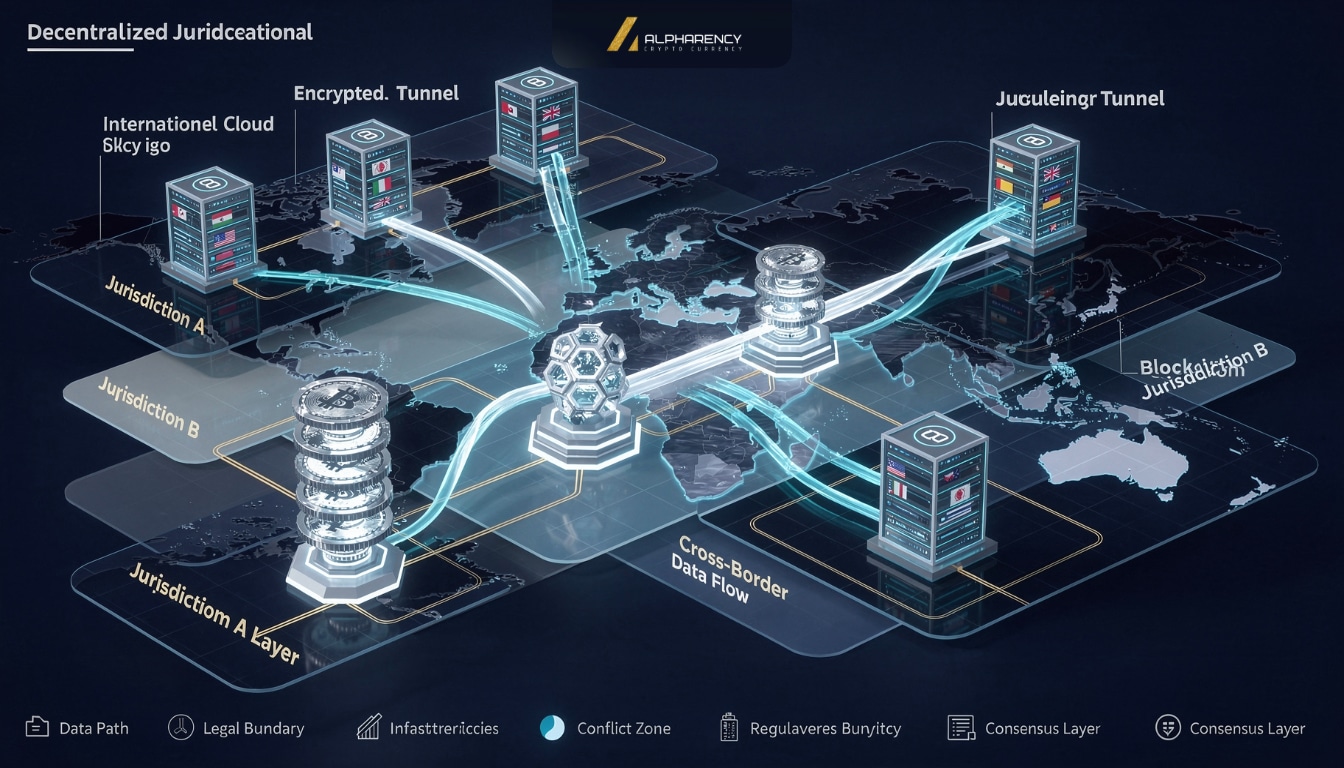
In cases where metaverse networks are implemented on open networks and peer-to-peer infrastructures, even accessing a specific company to seize its data or requesting user information through a judicial subpoena becomes impossible; because there is no central entity to hold accountable to law enforcement officers.
The Mystery of Proving Guilt: From Establishing Criminal Intent to the Challenge of Identity Forgery
Every criminal case requires the proof of two fundamental elements: the material element, or physical behavior, and the mental element, or mens rea and criminal intent. In ordinary courts, examining fingerprints, CCTV footage, or forensic medical injuries clarifies the link between the act and the result; however, in the metaverse, server log data only show that a certain 3D character has approached another character or that a code for asset transfer has been executed. Was the avatar's approach due to a software bug, an internet connection delay, or did the user behind the device intentionally move their headset?
Distinguishing System Bugs from Intentional Malice
Imagine that during the exchange of a piece of virtual land in the form of an NFT, a user submits a transfer command, but due to an error, the smart contract sends the asset to a different address; or an attacker, by injecting malicious code into their avatar, records confidential conversations inside an encrypted meeting room and commits extortion. Proving whether the device operator personally directed this action or if their system was controlled by malware requires advanced-level digital evidence.

A more serious challenge is multiple identities. An individual can simultaneously control dozens of avatars with conflicting visual and biometric characteristics. In the absence of stringent identity verification mechanisms that do not compromise privacy, such as zero-knowledge protocols, cyber police cannot be certain who was wearing the headset at the moment the incident occurred; unless biometric authentication systems within the hardware are legally linked to individuals' civil identities, which itself is considered a fundamental threat to individual freedoms.
Transnational Governance and Dispute Resolution Mechanisms in the Context of Web3
The failure of geographical boundary models has made the need for new legislative frameworks unavoidable. Some experts suggest that metaverse spaces should be defined under specific international treaties, similar to international waters, outer space, or Antarctica; regions where no single state holds absolute sovereignty, but a set of fundamental behavioral principles and globally accepted jurisdictions prevail. However, reaching a single international consensus among geopolitical powers will take years.
Decentralized Courts: Algorithmic Judgment Instead of Traditional Judiciary
In the vacuum of state laws, the Web3 ecosystem has initiated decentralized dispute resolution mechanisms. Protocols such as Kleros, using game theory and token-based staked juries, address financial disputes and breaches of contractual obligations. However, algorithmic arbitration protocols are only capable of seizing crypto collateral or nullifying smart contracts; they possess no leverage to address psychological violence or issue deterrent criminal sentences such as imprisonment.
Hardware Responsibility and Enforceable Platform Agreements
In the short term, the most practical tool for combating crime is the combination of in-app technical mechanisms with local criminal law. Defining mandatory privacy bubbles in software, enabling local recording of audio and video incidents with cryptographic signatures, and revising platform Service Level Agreements (SLAs) constitute the first line of defense for users. If a user commits an overt offense from within a country's territory, and the effects of that behavior result in tangible harm to mental health or property within that same jurisdiction, local courts will intervene based on the "effects principle" of crime.
Key Points to Remember
- Traditional border-based jurisdiction has lost its effectiveness against decentralized servers and cross-border metaverse interactions.
- Proving criminal intent in virtual reality spaces is much more complex than in the physical world due to the possibility of system errors, software bugs, and pseudonymous identities.
- Blockchain arbitration mechanisms are efficient in the financial sector, but mitigating psychological and criminal harms will require coordination between hardware manufacturer standards and international cyber conventions.
In your opinion, should behavioral harms and invasions of avatar privacy in the virtual reality world carry punishments commensurate with real-world crimes, or is the responsibility for controlling such behaviors solely on the platform developers? Share your analytical perspectives with us in the comments section.
Previous Post :

Calculating Maximum Drawdown (MDD); Assessing the real risk of a portfolio beyond the chart
Latest Contents
Latest Contents
Jurisdiction in the Metaverse: Criminal Law Challenges in 3D Spaces and Avatar Harassment
Read more

Calculating Maximum Drawdown (MDD); Assessing the real risk of a portfolio beyond the chart
Read more

Ray Dalio-Style Asset Allocation in the Digital Age: Building a Crisis-Proof Portfolio
Read more

High-paying AI jobs that universities don't teach you
Read more

Prompt Engineering; Unveiling Hidden Commands in AI Outputs
Read more
User CommentsComments
Be the first to comment on this article